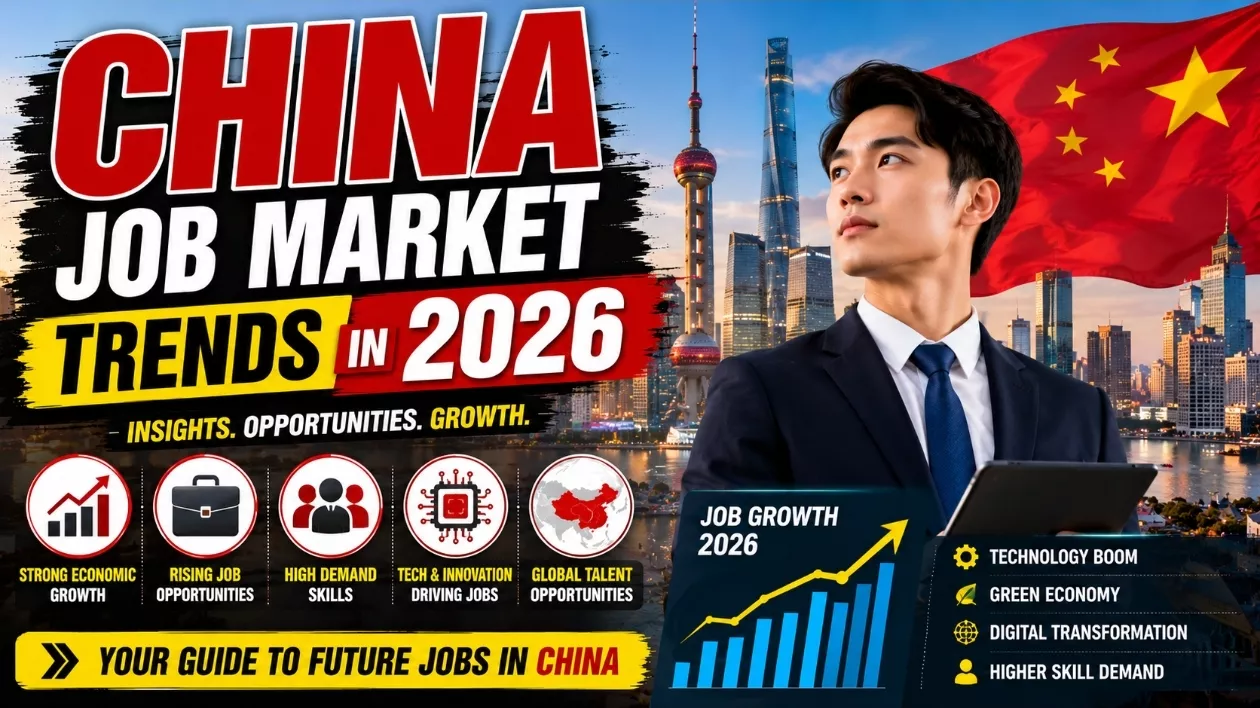
China Job Market Trends in 2026
Looking ahead to 2026, the China job market is poised for significant changes. These changes will shape the future of employment in China. The rapid economic growth, technological innovation, and evolving workforce trends will create a dynamic environment. This is especially relevant for professionals in India, who are considering cross-border opportunities or collaborations with China.
Understanding these shifts is crucial for navigating the job market. It’s essential for positioning oneself strategically in emerging sectors and roles.

Key Takeaways
- China’s economic growth will heavily influence the demand for new jobs by 2026.
- Technological advancements will redefine industry requirements and open new career paths.
- Changing workforce demographics will impact employment patterns and opportunities.
- Cross-border career opportunities between India and China are expected to increase.
- Awareness of China workforce trends is essential for professionals planning future employment China.
- Adapting to market transformations will be key to leveraging career opportunities China 2026.
Overview of the Chinese Job Market
The Chinese job market has seen major changes over the years, moving from a mainly agrarian economy to a more diverse and tech-driven one. This change reflects broader shifts in China’s economic structure. It has significantly impacted employment patterns and opportunities.
The Evolution of Employment in China
China’s economic reforms, starting in the late 20th century, have reshaped its employment landscape. These reforms moved the economy from state-owned enterprises to a more open market where private businesses thrive. This change has driven China’s economic growth and transformed the labor market. Now, jobs in urban areas focus more on services than manufacturing or agriculture.
Key Economic Indicators Influencing Job Opportunities
Understanding the link between Chinese GDP and jobs is key to grasping the labor market’s dynamics. Indicators like GDP growth, foreign direct investment (FDI), and consumer spending are vital. For example, as GDP has grown, so have job opportunities, especially in tech and services. These sectors require advanced skills due to digitalization and global connections.

Additionally, the export-import balance impacts job creation, with China being a major player in manufacturing and trade. These factors create a complex labor market. Opportunities are shaped by both domestic policies and global trends.
Looking ahead, these indicators will remain crucial in shaping the Chinese job market. It’s essential for job seekers and policymakers to stay informed about these trends. This way, they can plan effectively.
China Job Market Trends in 2026
As we near 2026, it’s clear that specific sectors in China’s economy are poised for significant expansion. These sectors are set to become the fastest growing industries in China, marking a new era of economic prosperity. The growth in high-tech fields like artificial intelligence, biotechnology, and advanced manufacturing will transform the job landscape. Meanwhile, traditional sectors such as finance and healthcare are embracing new technologies to boost efficiency.
Predicted Growth Sectors
- Green Energy
- Artificial Intelligence
- Biotechnology
- Advanced Manufacturing
- Finance
- Healthcare Services
Emerging Skills and Qualifications
The next wave of in-demand skills China will focus on digital literacy, a critical skill in today’s tech-centric world. Data analytics will become essential across industries, driving innovation and decision-making. For those in technical fields, deep engineering expertise will be paramount. Moreover, as global markets become more interconnected, the ability to communicate in multiple languages will be highly valued.
To meet the evolving needs of the China 2026 workforce skills, professionals and students must align their learning with these trends. Early recognition and adaptation to these shifts can give a significant competitive advantage in the job market.

The Impact of Technology on Employment
China’s journey into the future is marked by a significant role of technology, especially automation and artificial intelligence (AI). These advancements are reshaping the job market, leading to changes in job dynamics and the creation of new employment categories. Digital innovations are at the heart of these transformations.
Automation and Its Role in Job Creation
Concerns about automation jobs China replacing traditional roles are valid, yet the reality is more complex. Automation does take over some manual tasks, but it also opens up new job opportunities across various sectors. Roles in maintenance, programming, and tech support have emerged, requiring skilled professionals. This shift towards technology-driven jobs emphasizes the importance of continuous learning and adaptation for job security.
The Rise of Remote Work Opportunities
The growth of digital connectivity and flexible work cultures has significantly increased remote work China options. Employees can now work from anywhere, improving productivity and work-life balance. This expansion benefits both workers and businesses, allowing them to access a wider talent pool without geographical limitations. As AI impact employment China, the ability to leverage remote work is crucial for personal and corporate development.
This transformative period in China’s employment landscape shows that technology’s integration in the job market can lead to substantial gains. It’s essential for businesses and employees to develop strategies that embrace these changes. This way, they can capitalize on the opportunities technology offers.
Changes in Workforce Demographics
Exploring the Chinese job market reveals significant trends in China workforce demographics and aging workforce China. These changes reflect shifting age patterns and evolving gender roles, enhancing gender diversity job market China.
Age Distribution and Employment Opportunities
China’s demographic structure is aging rapidly, presenting both challenges and opportunities in the labor market. To address this, policies have been implemented to support an aging workforce China. These include extended retirement ages and incentives for older workers to stay engaged, preserving their experience and wisdom.
The Role of Women in the Workforce
The role of women in China’s workforce is also undergoing significant changes. Women’s employment trends China indicate a positive trend, with more women taking on leadership roles. This shift not only boosts gender diversity job market China but also drives innovation and corporate success. Initiatives aimed at increasing female participation include government and corporate programs promoting equal employment opportunities and supporting working mothers.
Understanding these demographic shifts is vital for businesses and policymakers. It guides strategic planning for recruitment, training, and development, ensuring China’s evolving workforce is fully utilized.
International Organizations and Job Opportunities
The rise of foreign companies in China has reshaped the global job market, drawing in skilled professionals. This shift invites them to explore vast career opportunities in China. As multinational corporations deepen their presence, the chances for international professionals to engage with the Chinese market grow significantly.
Foreign Companies Expanding into China
Recently, sectors like technology, automotive, finance, and consumer goods have seen a surge in foreign investment. Companies worldwide are setting up shop in China, attracted by its vast market and growing international business environment. This trend highlights the need for talent that can handle both local and global business challenges, creating a strong demand for jobs in foreign companies in China.
Career Opportunities for International Professionals
The influx of multinational corporations in China has transformed the local economy and opened up numerous career paths for expatriates. These roles span from senior management to specialized technical positions, requiring a broad skill set. This includes language proficiency, cultural understanding, and specific industry knowledge. The presence of these global giants supports a thriving global job market in China, where international professionals can flourish.
| Sector | Scope for Foreign Companies | Opportunities for Expatriates |
|---|---|---|
| Technology | High demand for R&D centers and innovation hubs | Roles in project management, software development, and systems integration |
| Automotive | Expansion of manufacturing and electric vehicle production | Engineering, design, and supply chain management |
| Finance | Increasing presence of global banks and investment firms | Positions in market analysis, investment consulting, and financial planning |
| Consumer Goods | Growth driven by rising consumer spending | Marketing, sales, and brand management positions |
These developments position China as an exciting and viable location for career advancement within the international community. As China continues to integrate into the global economy, opportunities for both local and international professionals are expected to expand. This makes careers for expats in China a promising prospect for the future.
Job Market Regulations and Policies
China’s rise as a global economic leader has led to ongoing updates in its labor laws. It’s essential for employers and employees to stay informed about the China labor laws 2026, employment regulations China, and labor policy changes. These updates help navigate the dynamic job market.
The latest labor policy updates China aim to strengthen workers’ rights China, meeting international standards. These reforms aim to create a fairer work environment. They impact employment terms, contract conditions, and welfare benefits.
| Policy Area | Description | Impact |
|---|---|---|
| Contract Law Revisions | Increased clarity on contract terms, rights, and termination conditions. | Higher security for employees, reducing the risk of arbitrary termination. |
| Minimum Wage Adjustments | Regional adjustments to minimum wage standards based on living costs and inflation. | Improvement in basic earning power aiding in poverty reduction. |
| Social Security Reforms | Expansion of benefits; inclusion of more workers in the social security net, especially in gig economy sectors. | Broader social coverage, leading to enhanced societal stability. |
| Health and Safety Regulations | Stricter enforcement of workplace safety norms and introduction of new guidelines in light of recent industrial trends. | Decrease in workplace injuries and long-term health issues, ensuring a healthier workforce. |
This significant change in employment regulations China is more than just an update. It’s a crucial step towards building a strong workforce. For businesses, it means adjusting strategies. For workers, it means better protection and improved conditions.
Key Challenges Facing Job Seekers
In China’s dynamic job market, applicants face numerous hurdles, especially in booming sectors like technology and healthcare. The urban rural employment gap China adds complexity, creating unique challenges for job seekers based on their location. This gap significantly impacts employment opportunities.
It’s vital to grasp the employment challenges China presents, including the career obstacles China faces due to its economic and social structures. This understanding is key for anyone aiming to succeed in this competitive landscape. Let’s explore the specific hurdles job seekers encounter across China.
High Competition in Popular Industries
In booming metropolitan areas, sectors like fintech, AI, and green energy have seen rapid growth. This has led to intense competition. Candidates face numerous highly qualified applicants for a limited number of roles. This competition not only raises the bar for entry-level positions but also increases the pressure on job seekers to stand out.
Geographical Challenges: Urban vs. Rural Employment
The divide between urban and rural employment opportunities persists. Cities like Shanghai and Beijing offer abundant career opportunities with high salaries. In contrast, rural areas face a scarcity of jobs and less diversity. This urban-rural divide widens socioeconomic disparities and limits access to opportunities for those outside urban centers.
| Location | Estimated Entry-Level Salaries in Tech (USD) | Availability of Career Development Programs |
|---|---|---|
| Shanghai | $50,000 | High |
| Beijing | $48,000 | High |
| Rural Northwest China | $15,000 | Low |
This table highlights salary discrepancies and the significant impact of location on career advancement in China. Job seekers must consider these factors when planning their career paths. This is especially true when evaluating potential relocations for better opportunities.
The Role of Education and Training
In today’s China, education for jobs China plays a crucial role, linking directly to economic growth and personal success. The job market’s evolution has heightened the need for higher educational standards and specialized skills. This highlights the deep connection between higher education impact employment and vocational training efforts.
The relationship between educational achievements and career success is striking in the Chinese economy. Educational institutions have adapted their curriculums to meet market demands. This has created an environment where skills development China is a top priority. We explore the key aspects of higher education and vocational training in shaping career paths.
Importance of Higher Education in Career Advancement
The landscape of higher education impact employment in China is promising. Degrees from top universities significantly increase employability and lead to high-level managerial positions. These opportunities are often inaccessible to those with lower educational levels. This trend is crucial for young professionals aiming to improve their socioeconomic status, enhancing the workforce’s overall quality.
Vocational Training Trends
Vocational training in China has undergone a significant transformation. These programs are designed to bridge the gap between education and industry-specific needs. They are vital in sectors facing severe skills shortages, such as manufacturing, technology, and services. The table below showcases recent trends in vocational training and their relevance to key industries.
| Vocational Program | Industry Application | Enrollment Numbers (2023) |
|---|---|---|
| Advanced Manufacturing | Manufacturing and Engineering | 120,000 |
| Information Technology | Technology Services | 95,000 |
| Renewable Energy Tech | Environmental and Energy Sectors | 85,000 |
These programs not only meet immediate employment needs but also play a crucial role in sustaining long-term economic growth and technological progress in China. As global economic patterns evolve, China’s labor market’s resilience heavily depends on ongoing education reform and vocational training China.
Job Search Strategies for 2026
Looking ahead, mastering the evolving job market in China is crucial. The shift towards digital platforms and the rise of networking demand new strategies. This part focuses on practical tips for using social media and the importance of career networking.
Leveraging Social Media for Job Hunting
Social media has become a key tool for job hunting in China. Platforms like LinkedIn and WeChat are essential for personal branding and direct employer communication. Specialized job portals also play a significant role, offering tailored job matches for the Chinese market.
Improving your social media profile is more than just listing your achievements. It’s about engaging with content, joining discussions, and showcasing your skills. This approach can greatly increase your visibility to recruiters looking for specific talents.
Networking and Its Importance in Career Advancement
In China, effective networking is vital for accessing hidden job markets and opportunities. It’s not just about collecting contacts; it’s about building meaningful relationships. Attending industry events, joining professional groups, and seminars can open doors to career advancement.
Career growth in China also depends on understanding cultural nuances and building genuine relationships. Networking allows for idea exchange, learning about new job openings, and staying updated on industry trends. These are essential for professional development in China.
Conclusion
Understanding the future of work in China is crucial for anyone looking to navigate the evolving job market. The 2026 employment outlook in China shows a landscape shaped by rapid technological advancements, demographic shifts, and policy reforms. These factors create both opportunities and challenges. The job market summary points out that sectors like technology, healthcare, and sustainable energy are set for growth. This highlights the need for continuous skill development.
For professionals in India planning their careers in China, staying updated on labor laws and market trends is key. The interplay between urban and rural employment, along with the rise of remote work, shows the importance of flexibility and adaptability. Employers look for not just formal education but also vocational training and practical experience that meets market needs.
Using social media and networking platforms can significantly improve job search efforts. It connects candidates to relevant opportunities and industry insights. As China’s labor environment evolves, those who embrace innovation and stay informed about policy updates will thrive. This overview aims to equip readers with the knowledge to make informed decisions and confidently navigate their career journey in China’s promising job market.